Research Projects
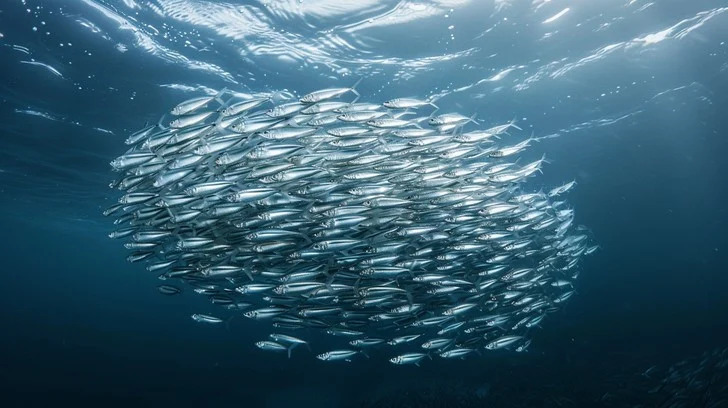
Specular colouration and mirror-like camouflage in fish
2026 – NOW
Detailed description following soon!

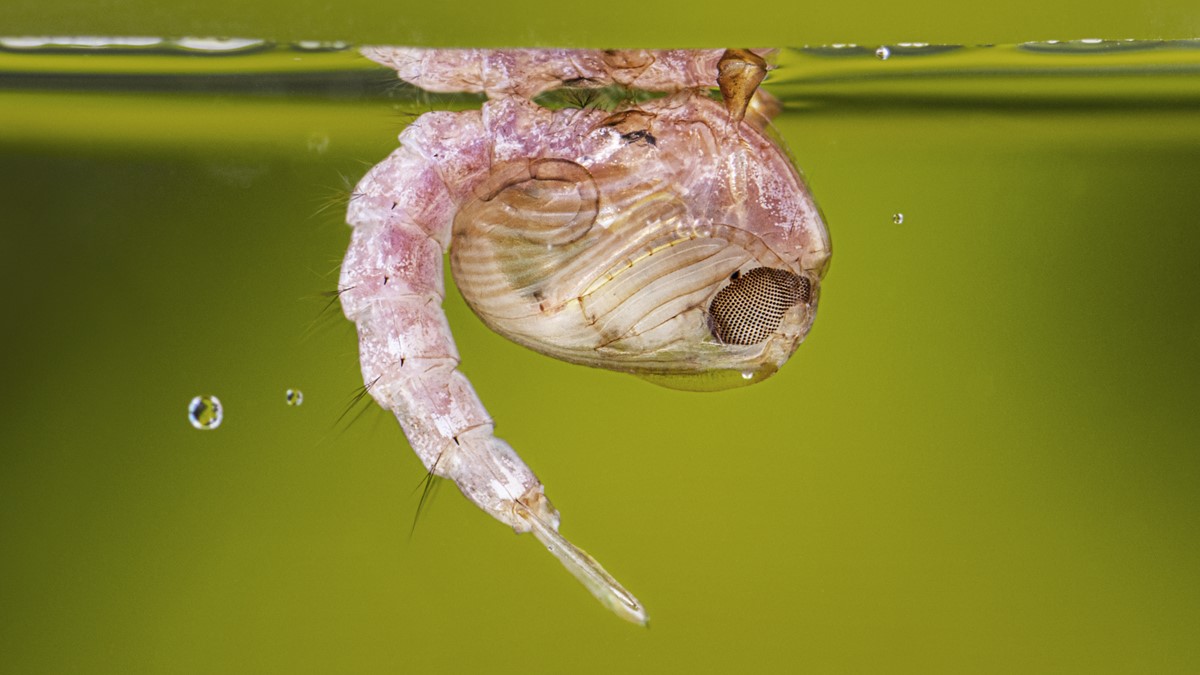
Behavioural and physiological desiccation avoidance mechanisms in mosquito pupae
2025 – 2026
Detailed description following soon!

The schooling behaviour of Caribbean reef squid in 3D space
2022 – 2025
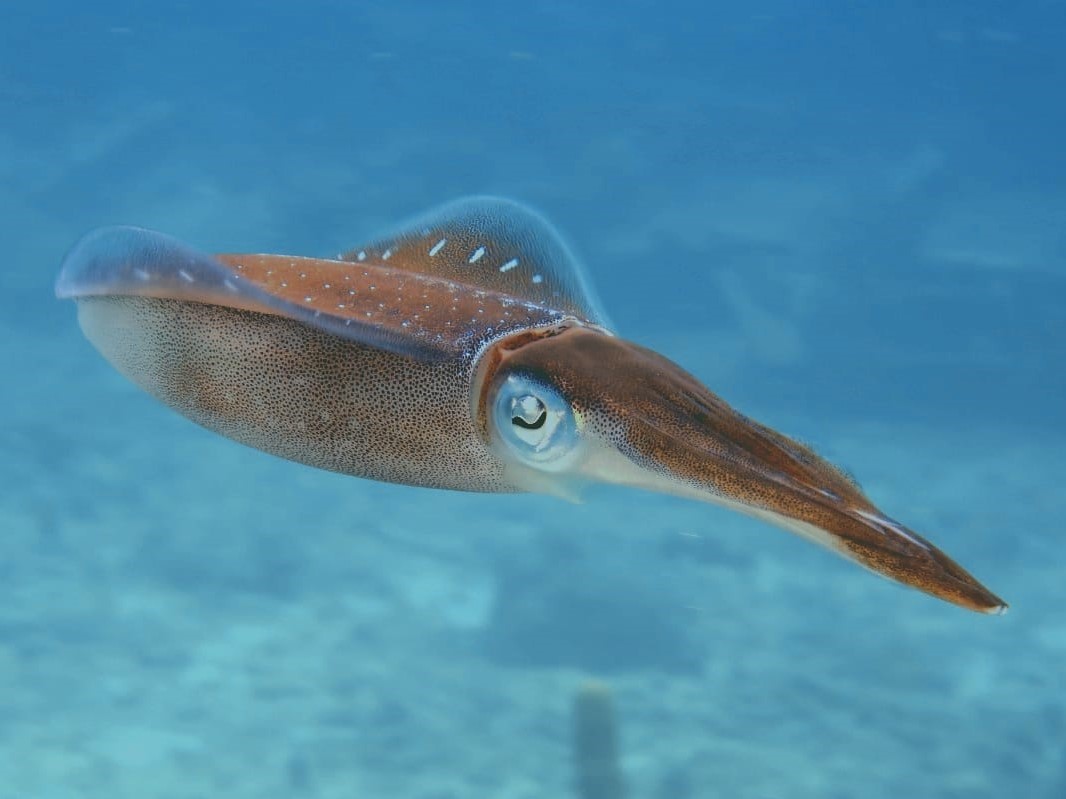
Many squid species show remarkable schooling behaviour. As part of my current Research Assistant position at the University of Cambridge (UK), I am investigating the schooling behaviour of the Caribbean reef squid Sepioteuthis sepioidea using stereo-footage of schooling squids I recorded in Curaçao. Using stereophotogrammetry and 3D-reconstuction approaches, I am establishing spatial properties of the schooling behaviour in three-dimensional space, such as the nearest neighbour distances and angles, as well as the degree of polarised orientation amongst squid individuals.

The impact of dynamic illumination on the behaviour of marine animals
2020 – 2024
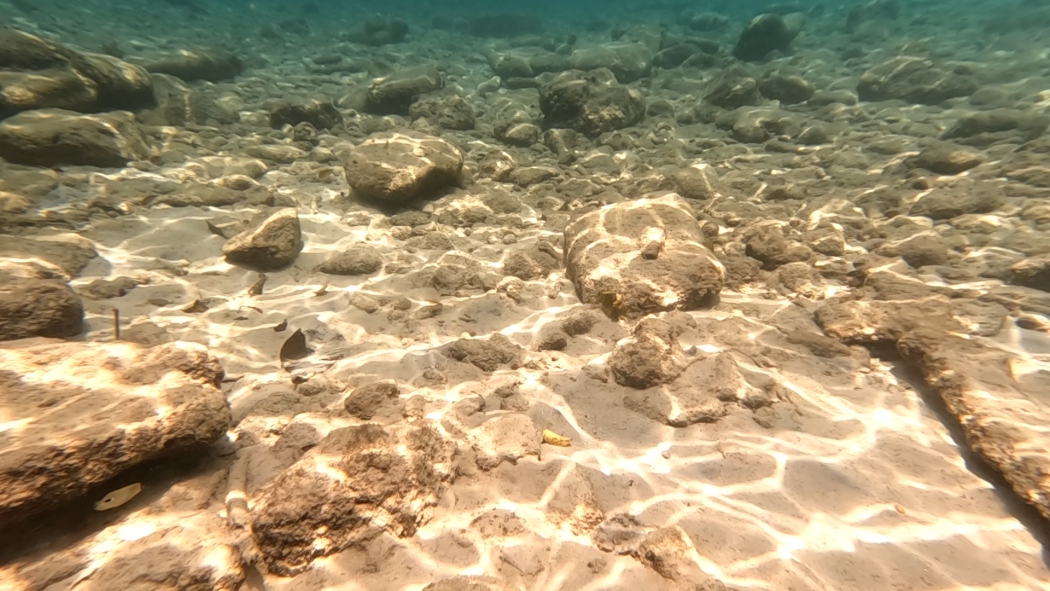
Shallow aquatic environments are prone to dynamically moving light patterns termed ‘caustics’, which been shown to impair the visual perception of fish species. Within my PhD research at the University of Cambridge (UK), I asked whether caustics also affect marine invertebrates, such as cephalopods or crustaceans, or whether they can mitigate the impact of this type of dynamic lighting on their perception and behaviour.
Shadowing behaviour in trumpetfish
2021 – 2025
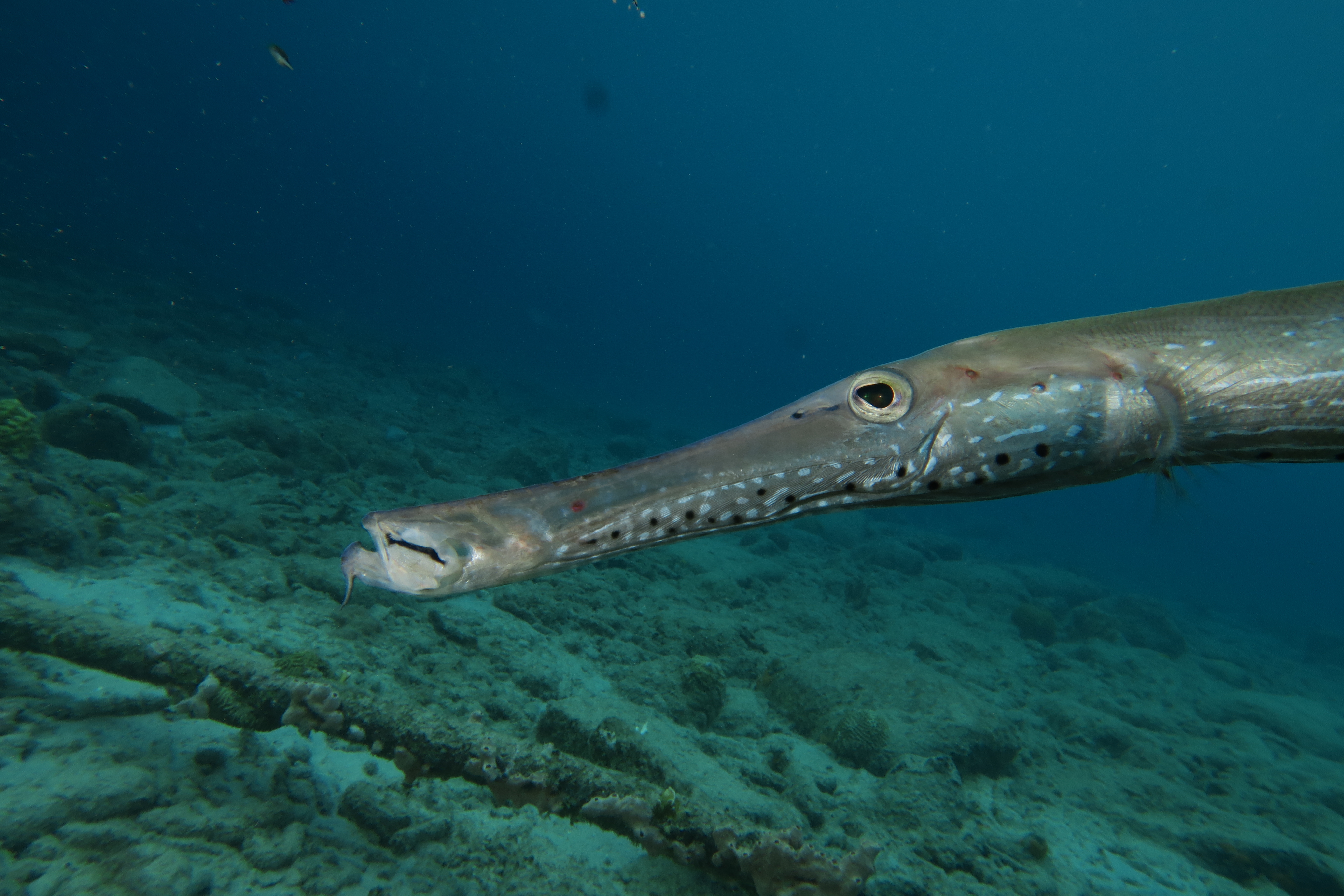
Trumpetfish (Aulostomus maculatus) often swim in close proximity to larger fish which has been suggested to enable them to remain concealed alongside the other animal as it approaches its prey. In this project, led by Dr Sam Matchette, we experimentally tested whether this ‘shadowing behaviour’ actually allows trumpetfish to approach their prey more closely without being detected. Following our finding that trumpetfish indeed gain closer access to prey via shadowing (Matchette et al., 2023), Sam continued to study the behavioural ecology of trumpetfish, e.g., by investigating whether we see differences in the frequency and success rate of shadowing between the three colour morphs found within this species.
The Behavioural Ecology of Bobtail Squids
2018 – 2022
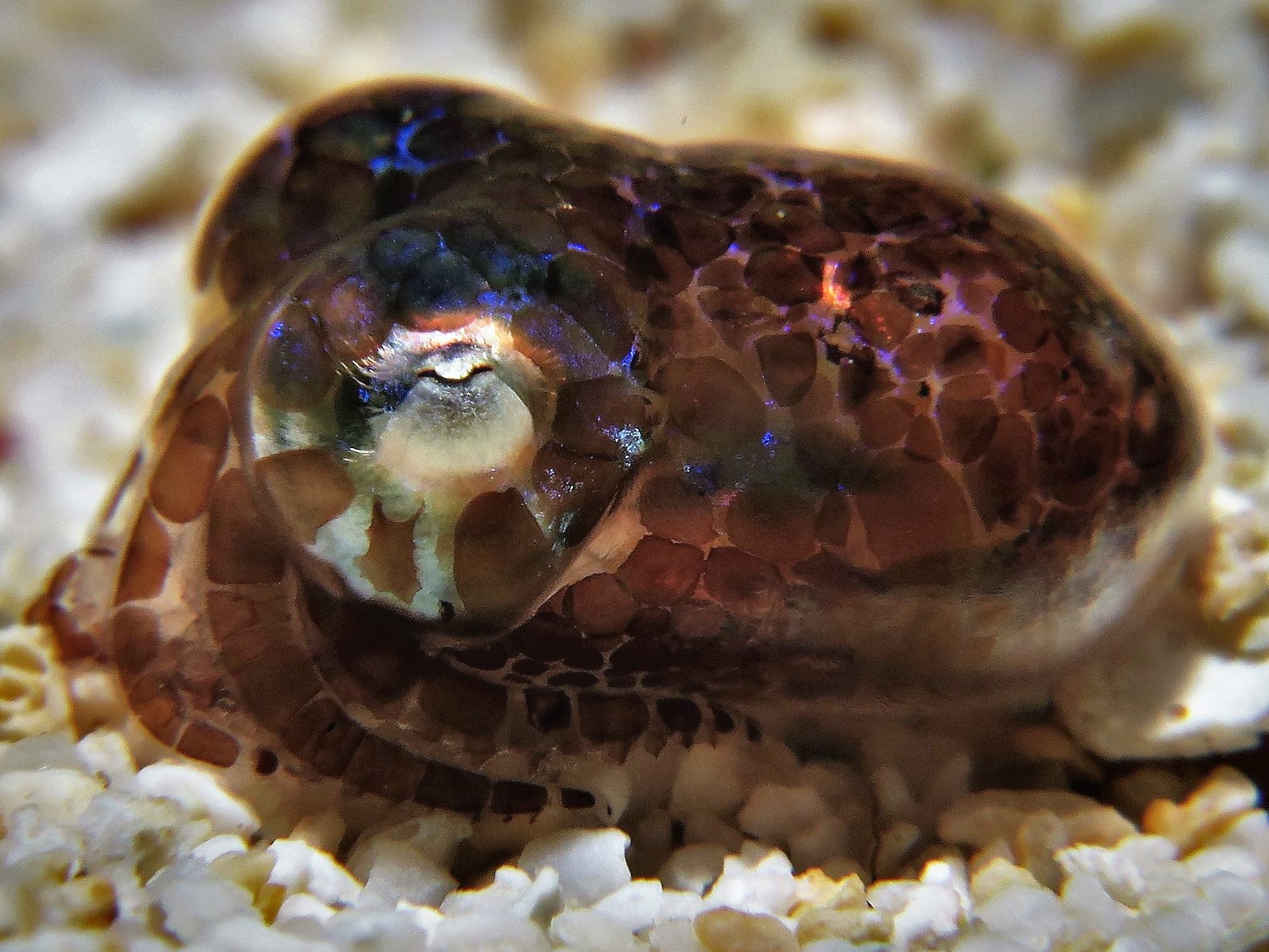
Bobtail squids (Cephalopoda: Sepiolida) are growing in popularity as model organisms, not least because of their well-studied symbiotic relationship with light producing bacteria. However, little is known about their behavioural ecology. As part of my M.Sc. thesis at the University of Algarve (Portugal), I went to Okinawa (Japan) to study the behavioural ecology of Eumandya parva (previously Euprymna parva; Drerup et al., 2020), as well as to Italy to investigate the burying behaviour of bobtail squids. Additionally, I used citizen-science observations to describe the behavioural ecology of wild individuals of Rossia macrosoma from Scottish water (Drerup et al., 2021). After finishing my M.Sc. thesis, I summarised our knowledge of the ecology of bobtail squids in a review paper (Drerup, 2022).
The Cephalopod Citizen Science Project
2017 – 2022
Citizen science has become a popular way of bringing public communities and scientific research closer. Together with Dr Gavan Cooke, I co-founded the ‘Cephalopod Citizen Science Project‘ in 2017 to connect researchers investigating cephalopod ecology with public stakeholders interested in cephalopods, such as the SCUBA diving community or fishermen. Primarily using social media based platforms, our project not only aimed at helping divers to understand how to best interact with cephalpods in the wild, but we also used their photo and video material provided to describe novel insights in the life history and behaviour of UK cephalopod species.